
Baby Movement Milestones: What to Expect and When to Seek Help
Meghna Nebhwani
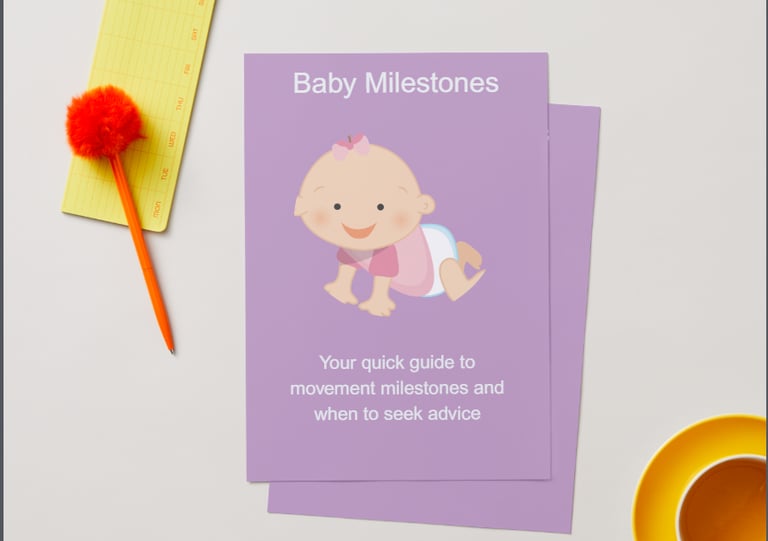
As a parent, watching your baby grow and move is one of the most exciting parts of those early months. But it can also be a source of worry — especially when you're not sure what's typical and what might need a closer look.
Development is not a straight ladder — it's more of a spiral, where babies revisit and build on earlier skills as they grow. Every child moves at their own pace, but knowing what to expect at each stage can give you confidence and clarity.
Here's a simple guide to key movement milestones and the signs worth checking with a health visitor or physiotherapist.
Rolling: 3–4 months
By 3–4 months, you may start to see your baby rolling from their back to their belly and back again. Look out for reaching for toys, twisting the body, playing on their side, and beginning to find their knees and toes.
🚩 When to seek advice (0–5 months): always looking to one side when lying down (by 4–8 weeks), using only one hand to reach for toys consistently (by 12–16 weeks), not tolerating tummy time, not rolling by 5–6 months, or unusually stiff or floppy muscle tone.
Sitting: 6 months onwards
From around 6 months, babies begin working towards sitting independently. Early signs include holding their head up when held at chest, prop sitting, and catching themselves when moved to the side.
🚩 When to seek advice (6–8 months): not sitting independently by 6 months, persistent chin lag when pulled to sit, or poor head control when sitting supported.
Crawling: 8 months onwards
Crawling builds core strength and coordination. Signs your baby is working towards crawling include pivoting, side sitting, commando crawling, and pushing up on their hands.
🚩 When to seek advice (8–10 months): not sitting unsupported by 8 months, not getting onto hands and knees by 10 months, or crawling asymmetrically — consistently dragging one leg or hand.
Walking: 12–15 months
Walking typically develops between 12 and 15 months, following a progression from pulling to stand, cruising along furniture, and eventually taking independent first steps.
🚩 When to seek advice: not pulling to stand by 10–12 months, not cruising by 12 months, not walking by 18 months, or consistently taking more weight on one leg.
Other signs that may need attention at any age
Very stiff or floppy body tone, persistent preference for one side of the body, loss of skills your child previously had, or limited interest in movement or exploring their environment.
When in doubt, reach out
Every child develops at their own pace and sometimes it's hard to know whether what you're seeing is typical or worth a closer look. If you're unsure, trust your instincts. Early support really can make a real difference.
📞 Call or WhatsApp Meghna: 07990 486886 📧 info@kinetikidsphysio.co.uk
Disclaimer: This guide provides general information about typical child development. Every baby is unique and may progress at their own pace. If you have concerns, please consult a children's physiotherapist, health visitor, or healthcare professional.